Health

Female Hair Loss: Discover the Real Cause

Stop suffering in silence and finally find answers about your hair loss.

This quick and free test helps you identify what might be causing your hair loss. It's just a few simple questions that will give you a clear direction.

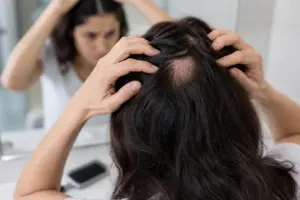
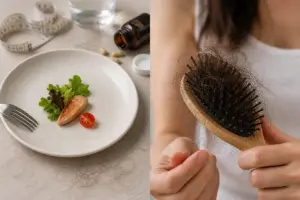
You wake up in the morning and see strands of hair on your pillow. You take a shower and the drain is full of hair. You run your hand through your hair and several strands get caught in your fingers.

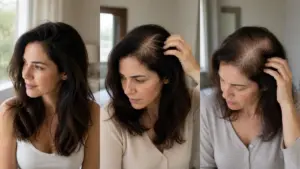
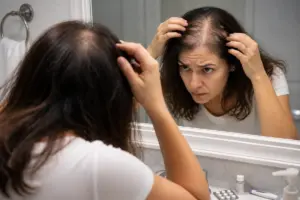
You look in the mirror and realize that the volume is different, thinner, less full. And along with the hair that falls out, a piece of your confidence goes away too.

Because hair isn't just hair for a woman. It's part of how you see yourself, how you feel beautiful, how you present yourself to the world.

When your hair starts to fall out, it's as if a part of your identity is slipping through your fingers.

You try to disguise it, you style your hair in different ways, you avoid certain lights, you hope that no one notices.

But you realize.

And it hurts in a way that's hard to explain to someone who's never been through it.

Discovering the cause of your hair loss early on isn't a matter of vanity.

It's a matter of health and emotional well-being.

Because the longer you wait without understanding what's happening, the more hair you may lose, and some causes can lead to permanent damage if not treated in time.

In addition, hair loss is often a sign that something in your body isn't working properly.

It could be hormonal imbalance, a lack of some important nutrient, excessive stress, or some condition that requires medical attention.

Your body is trying to tell you something through your hair.

There are several different causes of hair loss in women, and each requires a specific type of care.

Hair loss after having a baby happens because pregnancy hormones change drastically after childbirth, causing many strands to fall out at once a few months later.

This is temporary and usually resolves itself.

Very intense or prolonged stress can cause the body to push a lot of hair follicles into the resting phase at the same time, causing hair loss a few months after the difficult period.

Hormonal problems such as thyroid disorders or an excess of male hormones can cause persistent and progressive hair loss.

A lack of important nutrients such as iron, protein, vitamins, and zinc prevents hair from growing properly because it lacks the building blocks it needs.

There are also specific conditions such as alopecia areata, where the body's defense system mistakenly attacks its own hair follicles.

When hair loss is not investigated and treated, the problem can worsen without you understanding why.

If it's an uncorrected nutritional deficiency, you'll continue to lose hair month after month.

If it's an untreated hormonal imbalance, the hair loss can become progressive and cause permanent thinning.

If it's an inflammatory condition of the scalp that goes untreated, it can even cause irreversible damage to the follicles.

That's why time matters.

The sooner you discover the cause and start treatment, the greater the chances of recovering your hair and preventing further loss.

Several healthcare professionals can help you understand and treat hair loss.

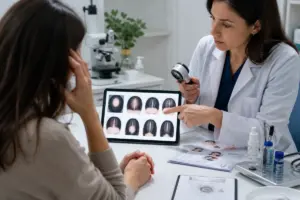
A dermatologist is a medical specialist in skin, hair, and nails, and is usually the primary professional to investigate hair loss.

He examines your scalp, orders blood tests, and can diagnose most causes.

A gynecologist can help when hair loss is related to female hormonal issues such as polycystic ovary syndrome, thyroid problems, or menopause.

A nutritionist comes in when the cause is linked to nutritional deficiencies or overly restrictive diets.

He assesses your diet and helps correct any deficiencies.

In some cases, you may need more than one professional working together to resolve the problem completely.

Understanding that each cause of a fall requires different care is essential so you don't waste time and money on things that won't work.

If your hair loss is due to iron deficiency, taking generic hair vitamins may not solve the problem because what you need is to specifically replenish your iron.

If it's hormonal, changing shampoo or moisturizing won't help because the problem isn't in the hair strand, it's inside your body.

If it's alopecia areata, which is autoimmune, you need treatments that calm the immune system, not cosmetic products.

Therefore, a correct diagnosis is the first and most important step.

Without knowing what's causing it, you're just shooting in the dark, trying everything and hitting nothing.

I know it can seem scary to seek help, to have tests done, to hear diagnoses.

You might be afraid of discovering something serious, or of hearing that there's no solution.

But in the vast majority of cases, hair loss has an identifiable and treatable cause.

Millions of women go through this, find answers, get treatment, and regrow their hair.

You are not alone, you are not the only one, and you don't need to continue suffering without understanding what is happening.

Your hair deserves attention, and you deserve to feel good about yourself again.

Take that first step of investigating, of seeking answers, of taking care of yourself.

Your future self will thank you for having the courage to act now.


Frequently Asked Questions About Female Hair Loss

How many hairs per day is it normal to lose?

It's normal to lose between 50 and 100 strands of hair per day as part of the natural renewal cycle. If you wash your hair every day, you'll see fewer strands falling out throughout the day because they come out during your shower. If you only wash it a few times a week, it will seem like more falls out on wash day because it has accumulated. What is not normal is being able to pull out several strands easily, seeing the drain clog frequently, or noticing that the volume has visibly decreased.

Does stress really cause hair loss?

Yes, very intense physical or emotional stress can cause hair loss a few months after the stressful period. This happens because stress causes the body to prematurely push more hair strands into the resting phase. Events such as surgery, the loss of a loved one, divorce, job loss, or any very difficult situation can trigger hair loss. The good news is that when the stress decreases, the hair usually grows back normally.

Do hair vitamins really work?

Vitamins and supplements can help if your hair loss is caused by a specific nutritional deficiency identified in blood tests. If you are deficient in iron, biotin, zinc, or other vitamins, supplementation may improve hair loss. But if the cause is hormonal, genetic, or autoimmune, taking vitamins won't solve the problem. That's why it's important to get tested before spending money on supplements, to find out if you really need them.

When should I see a doctor?

Seek a dermatologist if hair loss is very intense and sudden, if you notice bald patches or areas without hair, if it is accompanied by itching or pain on the scalp, if the hair is visibly thinning, or if the hair loss persists for more than three months. Also seek help if hair loss is accompanied by other symptoms such as extreme fatigue, weight changes, or changes in the menstrual cycle, as this may indicate hormonal problems that need to be investigated.

Is there a cure for hair loss?

It depends on the cause. Temporary hair loss caused by events such as postpartum, stress, or nutritional deficiencies usually resolves completely when the cause is treated. Chronic conditions like androgenetic alopecia have no definitive cure, but there are treatments that can stabilize hair loss and improve density when used continuously. Alopecia areata may regress spontaneously or respond to treatments, but it is unpredictable. The important thing is to investigate early and start the appropriate treatment for each case.


This content is for educational and informational purposes only and does not replace consultation with a doctor or qualified healthcare professional. Female hair loss has different causes that require correct diagnosis for proper treatment and hair recovery.

About the author

Malu Oliveira

I write about current events and technology, exploring trends and innovations. My passion is communicating complex ideas in an accessible and engaging way.