Health

Your hormones may have changed, and your hair too.

Find out if changes in your body are causing your hair loss.

This free test helps you find out if hormonal changes may be causing your hair loss. It consists of simple questions about your life stage and any symptoms you may be experiencing.

I WANT TO KNOW THE CAUSE ➜Hormones and Hair Loss ➜
You will remain on the current site.

The hormones in the female body never stand still.

They change every month during the menstrual cycle, they change during pregnancy, they change after childbirth, they change when you start or stop taking birth control, and they change again during menopause.

These hormones function as chemical messengers that control virtually everything in your body, including hair growth.

When hormone levels are balanced, hair grows strong and healthy.

But when something throws these hormones out of balance, the hair is often one of the first places you notice the problem.

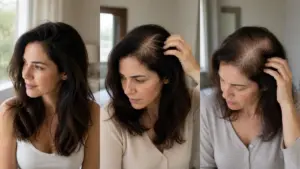
It could be a gradual thinning that you notice over months, or it could be a more intense drop that starts suddenly after some change in your body.

You look at photos from a few years ago and realize that your hair was noticeably fuller.

The ponytail got thinner, the elastic needs to be wrapped around it more times.

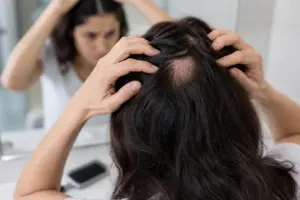
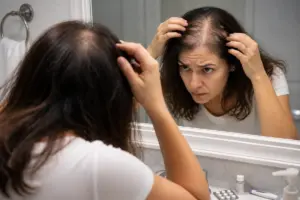
When you part your hair in the middle, the parting line is wider and you can see more of your scalp.

And it affects you in a way that's hard to explain to someone who's never been through it.

Because hair is more than just hair.

It's part of how you see yourself, how you feel feminine, how you present yourself to the world.

When your hair starts to thin, a part of your confidence goes with it.

You start avoiding certain lights that show too much of your scalp, you change the way you style your hair trying to disguise it, you feel insecure in situations where you used to feel comfortable.

And along with aesthetic concerns comes a concern for health.

Because you know that something in your body isn't working as it should.

Discovering the cause of the hair loss as soon as possible makes all the difference in the final result you will achieve.

The sooner you identify a hormonal cause and begin treatment, the greater the chances of halting the progression and even reversing some of the loss.

Many hormonal conditions that affect hair are progressive, meaning they tend to worsen over time if left untreated.

Waiting too long can mean losing hair that could have been preserved.

Furthermore, hormonal hair loss is almost always accompanied by other signs that something is wrong.

It could include irregular menstrual cycles, unexplained weight gain, adult acne, extreme fatigue, and intense mood swings.

Your body is trying to tell you it needs attention through these signals, and ignoring them is bad for every aspect of your health.

There are several different causes of hair loss in women, and hormonal causes are very common.

Polycystic ovary syndrome (PCOS) causes the ovaries to produce excess male hormones, leading to hair loss on the scalp and unwanted hair growth.

Thyroid problems, whether from overworking or underworking the thyroid, disrupt the metabolism of the entire body, including the hair follicles.

Menopause brings a natural drop in estrogen, the hormone that protects hair, causing many women to notice thinning hair after the age of 45 or 50.

Changes related to contraception, whether starting, switching types, or stopping, can trigger temporary hair loss or reveal a genetic predisposition.

The postpartum period causes a significant but temporary drop in hormone levels due to the abrupt hormonal changes following the birth of the baby.

There is also androgenetic alopecia, which is a genetic sensitivity to male hormones that all women have in small quantities.

When hormonal problems that cause hair loss are not diagnosed and treated, the situation usually worsens over time.

If it is untreated polycystic ovary syndrome, in addition to progressive hair loss you may have difficulty getting pregnant, an increased risk of diabetes, and other health problems.

If an untreated thyroid condition occurs, the impact goes far beyond hair and affects energy, weight, mood, and heart.

If it is untreated androgenetic alopecia, the thinning continues to progress year after year, and follicles that remain miniaturized for a long time may eventually stop functioning.

Therefore, treating the hormonal cause isn't just about hair regrow, it's about taking care of your overall health.

Several different doctors can help with hormonal hair loss depending on the specific cause.

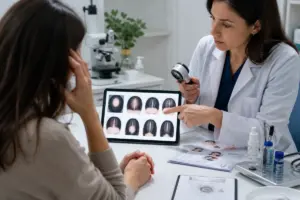
A dermatologist specializes in skin, hair, and nails, and can diagnose most types of hair loss through scalp examination and blood tests.

He can treat many hormonal causes or refer patients to other specialists when necessary.

A gynecologist takes care of women's reproductive health and is essential when hair loss is linked to polycystic ovary syndrome, menstrual problems, or issues related to birth control and menopause.

An endocrinologist is a specialist in hormones and treats thyroid problems, complex hormonal imbalances, and other endocrine conditions that affect hair.

Sometimes you need more than one of these professionals working together to fully solve the problem.

Knowing exactly what the hormonal cause of your hair loss is will determine which treatment will work for you.

If it is polycystic ovary syndrome, you may need birth control pills with specific properties, medications that block male hormones, or medications to control insulin.

If it's a thyroid issue, you may need thyroid hormone replacement or medication to slow down your thyroid, depending on whether it's underactive or overactive.

If it's menopause, hormone replacement therapy may help, or topical treatments like minoxidil.

If it is androgenetic alopecia, there are medications that block the action of hormones on the follicles.

Trying to treat something without knowing the real cause is like shooting in the dark; you can waste a lot of time and money without hitting the target.

I know it might seem like just another problem for you to solve when you already have so many things on your mind.

It can be tiring to schedule a doctor's appointment, get tests done, and deal with yet another issue.

But ignoring the problem doesn't make it go away, it only allows it to get bigger.

And you deserve to feel good about yourself.

You deserve answers about what's happening to your body.

Millions of women experience hormone-related hair loss, seek help, discover the cause, treat it properly, and see real improvement.

You could be one of them.

The first step is to investigate, understand, and then make informed decisions about your treatment.

Your hair matters because you matter.

And taking care of him is taking care of yourself.

I WANT TO KNOW THE CAUSE ➜Hormones and Hair Loss ➜
You will remain on the current site.

Frequently Asked Questions About Hormonal Hair Loss in Women

How can I tell if my hair loss is hormonal?

Hormonal decline is often accompanied by other signs such as irregular menstrual cycles, unexplained weight gain, adult acne, increased facial or body hair growth, excessive fatigue, or intense mood swings. The pattern of hair loss also helps identify it; it's usually a diffuse thinning at the top of the head while maintaining the frontal hairline. The only way to confirm this is through a medical consultation with blood tests that measure hormone levels such as testosterone, thyroid hormones, and other important markers.

Can birth control pills cause hair loss?

Yes, both starting and stopping birth control pills can cause temporary hair loss in some women due to the hormonal changes the body needs to process. Additionally, some pills contain types of progesterone that have activity similar to male hormones, and these can worsen hair loss in genetically predisposed women. On the other hand, pills with anti-androgenic progestin may improve hair loss. If you suspect your birth control is affecting your hair, talk to your gynecologist about switching to a different formulation.

Is hormonal imbalance curable?

It depends on the specific cause. Temporary hair loss caused by specific hormonal changes, such as postpartum or stopping birth control, usually resolves itself within a few months. Conditions like thyroid problems can be completely controlled with appropriate treatment, normalizing hair growth. Polycystic ovary syndrome (PCOS) can be managed with medications that control symptoms, including hair loss. Androgenetic alopecia has no definitive cure, but treatments can stabilize and improve hair when used continuously. The important thing is to diagnose early and treat appropriately.

Does menopause always cause hair loss?

Not always, but it's very common. Menopause brings a drastic drop in estrogen levels, the hormone that protects hair. With less estrogen, the male hormones that continue to be produced by the adrenal glands have more influence on the follicles. Women genetically predisposed to sensitivity to these hormones often develop hair thinning after menopause. Not all women experience visible hair loss, but about 40 percent of postmenopausal women experience some degree of hair thinning.

How long does it take to see improvement with hormone treatment?

Hair grows slowly, so even when you start the right treatment, it takes time to see visible results. Generally, you can expect to stop excessive hair loss within two to four months of proper treatment. But the visual recovery of density, where you actually see fuller hair, can take six months to a year because new strands need to grow. That's why it's important to be patient and continue treatment even when you don't yet see a change, because internally the improvement process has already begun.

I WANT TO KNOW THE CAUSE ➜Hormones and Hair Loss ➜
You will remain on the current site.

This content is for educational and informational purposes only and does not replace consultation with a doctor or qualified healthcare professional. Hormonal changes in women throughout life can cause progressive hair loss. Correct diagnosis allows for appropriate hormonal treatment and recovery.

About the author

Malu Oliveira

I write about current events and technology, exploring trends and innovations. My passion is communicating complex ideas in an accessible and engaging way.